Calories in Buckwheat
100 g of Buckwheat (also called kasha) has about 92 calories. At the reference weight of 168 g, that is about 155 calories. Enter the amount you actually eat to calculate your portion.
Calories per 100 g
92 kcal
calories per 100 g
- Protein
- 3.4 g
- Fat
- 0.6 g
- Carbs
- 19.9 g
These are reference values. Ingredients and preparation can change the result.
Macros in BuckwheatCalculate calories for your portion
Enter the weight to calculate calories and macros here. No sign-up required.
In your portion
155 kcal
- Protein
- 5.7 g
- Fat
- 1 g
- Carbs
- 33.4 g
About Buckwheat
Cooked buckwheat groats are hulled buckwheat seeds, often roasted, boiled in about two parts water to one part groats until the water is absorbed. In English the porridge is usually called kasha; in Russia, Ukraine and Belarus it is grechka. It is eaten as a side or a porridge, often boiled in milk or served with butter. The figures here are for plain groats cooked in water.
Also known as buckwheat groats or grechka.
Typical pieces and portions
Weights come from the sources below. Calories and macros are scaled from the per-100 g values on this page. Select a weight to load it into the calculator.
| Amount | Weight | Calories | Protein | Fat | Carbs |
|---|---|---|---|---|---|
| [5] | 15 g | 14 kcal | 0.5 g | 0.1 g | 3 g |
| [1] | 84 g | 77 kcal | 2.9 g | 0.5 g | 16.7 g |
| [1] | 168 g | 155 kcal | 5.7 g | 1 g | 33.4 g |
What changes the numbers
- Dry vs cooked weight. Dry roasted groats have 346 kcal per 100 g (a cup of dry groats weighs 164 g); cooked, they have 92 kcal because the grain absorbs water. Logging a dry weight as cooked undercounts by almost four times.[2]
- Butter stirred in. Kasha is often finished with butter, which the plain cooked figure leaves out. One tablespoon of butter (14.2 g) adds about 102 kcal.[3]
- Cooked in milk or with butter. Calorizator, a Russian calorie table, lists buckwheat porridge at 118 kcal per 100 g when cooked in milk and 132 kcal with butter, against 90 kcal for a thick porridge cooked in water.[4]
- Amount of cooking water. The usual ratio is 1 part groats to 2 parts water; more water gives a runnier porridge. Extra water adds weight but no calories, so a wetter cook has fewer kcal per 100 g than a dry, crumbly one.[6]
How to log it
Weigh buckwheat after cooking and log it as cooked. If you weighed the dry groats instead, log that weight as dry buckwheat, never as cooked. Add butter, oil or milk as separate items.
Sources for this note
- USDA SR via NutritionValue.org: Buckwheat groats, roasted, cooked (opens in a new tab)
- USDA SR via NutritionValue.org: Buckwheat groats, roasted, dry (opens in a new tab)
- USDA SR via NutritionValue.org: Butter, salted (opens in a new tab)
- Calorizator: Cereals and porridges calorie table (opens in a new tab)
- Fitatu: Buckwheat groats, boiled (opens in a new tab)
- Calorizator: Buckwheat porridge in water (1:2) (opens in a new tab)
- Wikipedia: Kasha (opens in a new tab)
How to calculate calories in Buckwheat
Multiply the calories per 100 g by your portion weight, then divide by 100. For the reference 168 g portion, the calculation is:
92 × 168 ÷ 100 ≈ 155 kcal
Reference portion: cooked cup (168 g). This is an example amount, not a recommended portion. Weigh your food when possible: a cup, slice or piece can vary in size.
This entry describes a cooked portion. Use the weight after cooking; do not substitute the dry or raw weight.
Calories by portion size
| Portion | Calories | Protein | Fat | Carbs |
|---|---|---|---|---|
| 50 g | 46 kcal | 1.7 g | 0.3 g | 10 g |
| 100 g | 92 kcal | 3.4 g | 0.6 g | 19.9 g |
| 168 g | 155 kcal | 5.7 g | 1 g | 33.4 g |
| 200 g | 184 kcal | 6.8 g | 1.2 g | 39.8 g |
Calculate the food you actually eat
Calculate a portion from your label
Have different numbers on the package? Use its calories, macros and serving weight instead of this reference entry.
See how calorie counting from a photo works
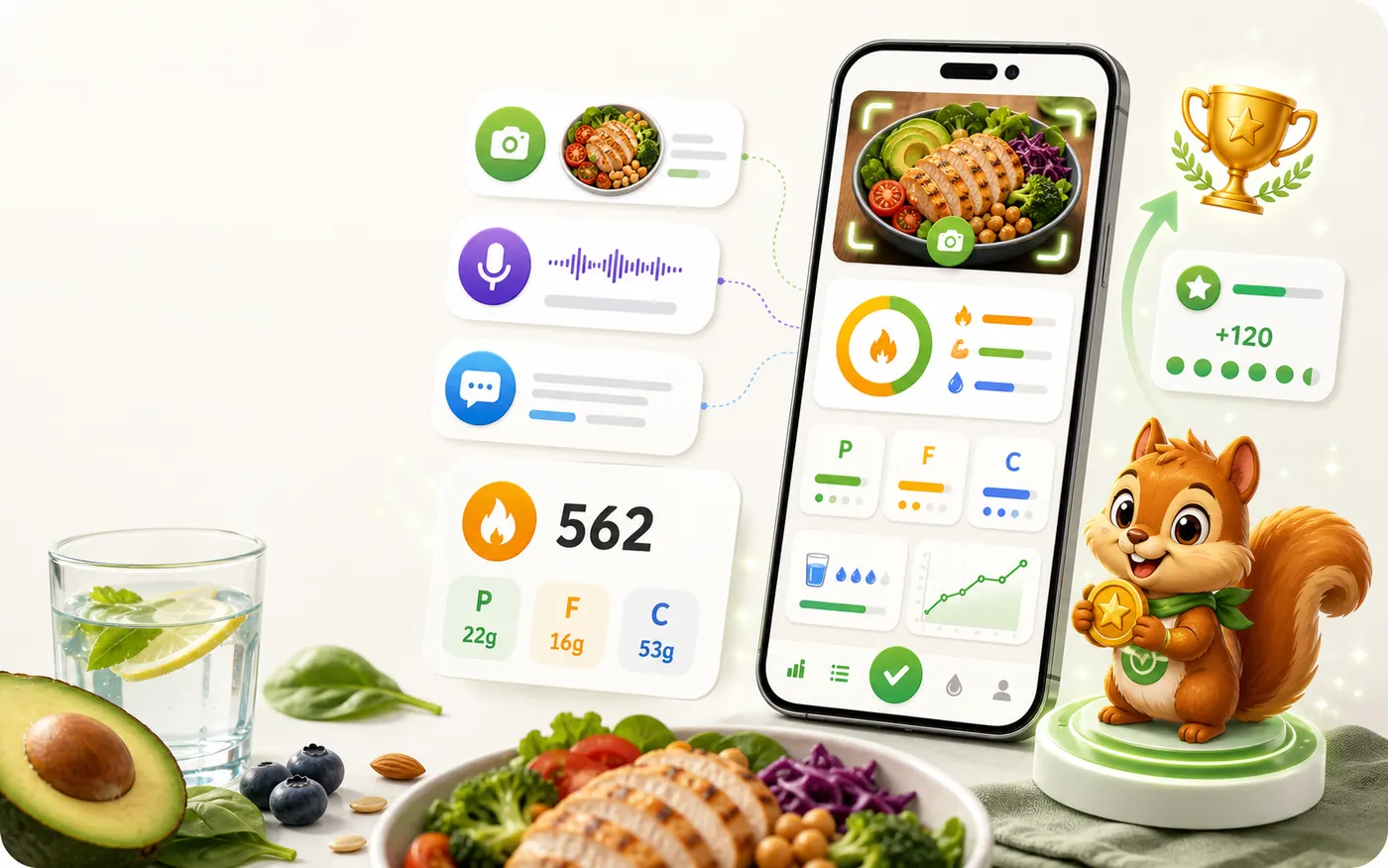
For a mixed meal, FoodWarz can suggest an estimate from a photo. Review the ingredients and portion in the app before saving.
Next: your food diary
Log meals by photo, text, voice or barcode. Check the portion and nutrition before saving.
 How FoodWarz works →
FAQ
How many calories are in a 168 g portion of Buckwheat?
Using this reference entry, 168 g has about 155 calories. The calculator scales the per-100 g value; it does not identify your recipe or brand.
Can I use the same number for any cup, slice or piece?
No. Household measures and individual pieces can have different weights. Use the gram weight of the edible portion, or the serving weight printed on your package.
How many calories are in 1 tablespoon, cooked?
1 tablespoon, cooked weighs about 15 g, which is about 14 calories at 92 kcal per 100 g.
How many calories are in 1/2 cup, cooked?
1/2 cup, cooked weighs about 84 g, which is about 77 calories at 92 kcal per 100 g.
Is buckwheat good for calorie tracking?
Yes, as long as you track portion size. The biggest source of error is usually weight, sauces, oil and mixed ingredients.
How Buckwheat compares
No other food in this table has fewer calories per 100 g than Buckwheat.
| Food | Calories | Protein | Fat | Carbs |
|---|---|---|---|---|
| Buckwheat (this page)Fewest calories | 92 kcal | 3.4 g | 0.6 g | 19.9 g |
| Pasta | 131 kcal | 5 g | 1.1 g | 25 g |
| Spaghetti | 157 kcal | 5.8 g | 0.9 g | 30.9 g |
| Whole wheat pasta | 124 kcal | 5.3 g | 0.5 g | 26.5 g |
| Bread | 265 kcal | 9 g | 3.2 g | 49 g |
| White breadMost calories | 266 kcal | 8 g | 3.3 g | 49 g |
| Whole wheat bread | 247 kcal | 13 g | 3.4 g | 41 g |
Data sources
Reference values are compiled from USDA FoodData Central, Open Food Facts and curated food databases. Your actual portion may differ by recipe, brand and cooking method.
Nutrition data methodologyNutrition values are estimates for calorie tracking and may vary by recipe, brand, cooking method and portion size. Not medical advice.
Last updated: October 3, 2026